How to Spot Quality Ingredients at a Pizza Restaurant
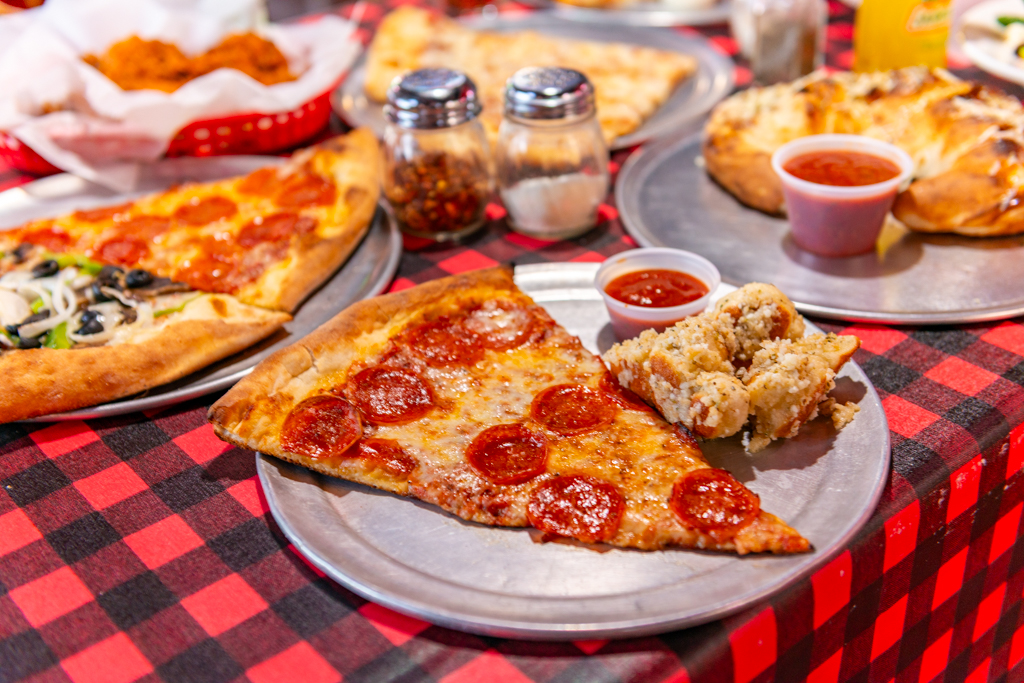


A great pizza can look simple from across the room. Blistered crust, melted cheese, a few leaves of basil, maybe a sheen of olive oil. Yet the difference between a memorable pie and a forgettable one usually comes down to ingredients, not theatrics. You can taste that difference in the first bite, but if you know what to watch for, you can often spot it before the server even sets down the plate.
That matters because pizza has an unusual way of exposing shortcuts. In a dish with relatively few components, weak ingredients have nowhere to hide. Cheap cheese turns rubbery. Sauce made from tired tomatoes tastes flat or aggressively sweet. Dough mixed without care bakes up pale, dense, or oddly flavorless. By contrast, a pizza restaurant that takes ingredients seriously tends to reveal it in small, visible ways long before the meal is over.
Over the years, the strongest signal I have found is consistency between what a place says and what arrives at the table. Some restaurants advertise premium ingredients and still serve a pizza crowded with watery vegetables, overcured meats, and a crust that tastes like nothing. Others say almost nothing, then quietly send out pies made with balanced sauce, fresh mozzarella, well-fermented dough, and toppings that taste distinct rather than generic. Quality is often less about grand claims and more about restraint, handling, and respect for each component.
Start with the menu, but read it like a skeptic
The menu is the first clue, though not always in the way people expect. Expensive language does not equal better ingredients. If a menu is packed with adjectives but short on specifics, be cautious. Terms like "gourmet," "artisan," and "premium" are easy to print. They tell you less than concrete details such as the type of mozzarella used, whether the tomatoes are San Marzano style or a domestic plum blend, whether the sausage is house-made, or whether the flour comes from a particular mill.
Specificity usually reflects a kitchen that knows what it buys and why. That does not mean every ingredient needs a pedigree. A local mushroom from a nearby farm is useful information. So is a note that the pepperoni is all-beef, that the olive oil is extra virgin and used after baking, or that the dough ferments for 24 to 72 hours. Those details suggest intention. They also create accountability. When a restaurant names ingredients precisely, it invites you to notice whether the finished pizza lives up to the description.
At the same time, there is a trade-off here. A sparse menu is not automatically a mark of quality, and a long menu is not proof of mediocrity. Some neighborhood spots manage a broad selection very well. But at most places, a tighter menu makes it easier to maintain ingredient standards. If a pizza restaurant offers forty toppings, six sauces, twelve crust styles, and a dozen cuisines under one roof, you should at least wonder how much of that inventory is fresh and how much is being held for convenience.
Dough tells the truth faster than toppings do
If you want the clearest evidence of ingredient quality and kitchen discipline, pay attention to the crust. Dough is not just flour and water. It is time, fermentation, salt balance, handling, and heat. Better ingredients show up here, but so does technique. You can have excellent flour and still produce dull pizza. Still, when a restaurant takes dough seriously, the signs are hard to miss.
A good crust should have character on its own. Even without sauce or cheese, it should taste lightly wheaty, faintly sweet from fermentation, and properly seasoned. Texture matters just as much. In a New York style pie, you want a balance between structure and tenderness, a slice that folds without collapsing into dampness. In https://josuecnrk099.currentvale.com/posts/why-every-community-needs-a-great-pizza-restaurant a Neapolitan pie, you expect a softer center, a puffy cornicione, and those dark leopard spots from a very hot oven. In a Roman-inspired crust, crispness is part of the point. Different styles demand different outcomes, but none of them should taste bland.
One easy test is the edge of the pizza. Many people leave the crust behind, which makes it the part some restaurants neglect most. But the rim gives away the whole operation. If it is dry, cracker-like, or tastes mainly of flour, the dough probably lacked fermentation or proper baking. If it is airy, fragrant, and enjoyable plain, you are likely dealing with a kitchen that respects its base ingredient.
I once ate at a busy pizza restaurant that used excellent imported toppings, at least on paper. The prosciutto was real, the cheese had a good reputation, the tomatoes came in decorated tins stacked where customers could see them. But the dough had almost no flavor. It had been rushed. The center turned gummy under the sauce, and the crust rim felt like a warm breadstick. The toppings could not rescue it. That meal was a useful reminder that premium ingredients piled onto weak dough still make weak pizza.
Sauce should taste like tomatoes, not sugar
Tomato sauce is another place where quality becomes obvious quickly. In good pizza sauce, the tomato remains the point. You should taste brightness, some natural sweetness, mild acidity, and a clean finish. The seasoning supports the tomato rather than smothering it. Salt should sharpen. Garlic, if used, should be present but not dominant. Herbs can add lift, but too much dried oregano often acts as camouflage for dull tomatoes.
A common flaw in lower-quality pizza is oversweet sauce. Sometimes that sweetness comes from added sugar meant to cover acidity or compensate for underwhelming canned tomatoes. Sometimes it comes from a cooked-down sauce designed for consistency rather than freshness. Either way, the result often tastes heavy. On a pizza, especially one baked hot, a thick sweet sauce can flatten the rest of the ingredients and make every slice feel the same.
Color and texture offer clues too. Very dark red sauce may indicate a longer cooked style, which can be fine for certain regional pizzas, but fresh-style sauces are often brighter and looser. You do not want watery sauce that floods the dough, but you also do not want a paste that sits in a heavy layer. Better pizzerias understand that sauce needs to integrate with the crust and cheese during baking.
If the restaurant offers a simple margherita or plain cheese pizza, that is often the best item to judge the sauce. Once sausage, olives, hot honey, roasted garlic, and multiple cheeses enter the picture, it becomes harder to isolate the tomato quality. Simpler pies reveal more.
Cheese should stretch, not suffocate
People often assume more cheese means better pizza. In practice, excess cheese can be a sign that the kitchen is compensating for weaker sauce, weaker dough, or weaker toppings. Quality cheese does not need to be piled on. It should melt evenly, brown in the right spots, and contribute richness without turning the whole slice greasy or heavy.
Mozzarella is the standard benchmark, but even within mozzarella there is a wide range. Fresh mozzarella has a milky, delicate flavor and releases more moisture, which means it must be used with care. Low-moisture mozzarella offers better browning and structure and is often the right choice for many styles. A thoughtful pizza restaurant knows when to use one, when to blend both, and how much each pie can handle.
Watch how the cheese sits on the pizza. If oil pools across the surface in orange slicks, the cheese may be overly processed, the toppings may be releasing too much fat, or the bake may be unbalanced. Some grease is normal, especially with pepperoni, but the overall impression should still feel integrated rather than swampy. Good cheese stretches in strands and tastes dairy-forward. Weak cheese congeals quickly and leaves a salty, anonymous aftertaste.
Age and storage matter here as much as sourcing. A fine mozzarella can perform badly if it is mishandled. Pre-shredded cheese often contains anti-caking agents that affect melt and texture. Cheese left uncovered too long dries out. Cheese held at the wrong temperature can weep or break. You may not see the storage process directly, but you can often see its effects in the finished pie.
Toppings reveal whether the kitchen understands restraint
A pizza loaded with toppings can be enjoyable, but abundance and quality are not the same thing. Strong kitchens treat toppings as accents that work with the crust, sauce, and cheese. Weak kitchens use them as clutter. When a pizza arrives buried under ingredients, ask whether the kitchen chose those toppings because they belong together or because excess feels like value.
Vegetables should look and taste like themselves. Mushrooms should be savory and concentrated, not wet and gray. Bell peppers should retain some brightness, not slump into sweetness alone. Onions should soften without disappearing. Fresh basil should usually be added after baking or near the end, so it stays aromatic rather than blackening into confetti. Arugula, if used, should taste peppery and alive, not tired and damp.
Meats can be even more revealing. Good pepperoni cups and crisps at the edges, releasing spice and fat in balance. Bad pepperoni turns leathery or floods the pie with grease. Sausage should taste seasoned and distinct, not like generic ground meat. Prosciutto should be laid carefully so it contributes salinity without becoming brittle. Chicken, despite its popularity on many menus, is often the easiest topping to overcook and the hardest to integrate well. If a restaurant handles delicate toppings properly, that is usually a positive sign.
There is also the question of how many toppings a crust can support. This is one of the most overlooked signs of ingredient intelligence. A kitchen that understands pizza knows the physical limit of the dough beneath it. Too many wet vegetables, too much fresh cheese, or too many fatty meats can swamp the crust and destroy texture. When a restaurant keeps combinations balanced, it often reflects better ingredient judgment overall.
Freshness shows up in small details around the room
You do not need a kitchen tour to get a feel for freshness. The dining room and service flow provide plenty of hints. An open kitchen helps, but even without one, you can still read the room.
Here are a few signs worth noticing:
- Fresh basil, grated cheese, and finishing oil appear to be used deliberately, not dumped on every pie by routine.
- Pizzas come out looking slightly individual rather than perfectly identical in a factory-made way.
- Staff can answer simple ingredient questions without sounding like they are reciting from a script.
- The smell in the room leans toward baked dough, tomato, and cheese, not fryer oil or stale grease.
- Simple pies seem popular, which usually means the basics are good enough to stand on their own.
These details may sound subtle, but together they are useful. Fresh ingredients create livelier aromas. Confident staff usually reflect a restaurant that trains people on the product. And kitchens that trust their core ingredients tend not to disguise every pizza under the same heavy finish.
The oven matters, but not in the way marketing suggests
Wood-fired ovens get a lot of attention, and they can produce excellent pizza. So can gas ovens, deck ovens, electric ovens, and conveyor ovens in the right hands. The oven matters, but it is not a certificate of quality by itself. A beautiful tiled oven can still bake mediocre pizza if the dough is underfermented or the toppings are careless.
What the oven does reveal is whether the kitchen understands how ingredients behave under heat. High-temperature ovens demand a different sauce application, different cheese quantity, and often a different dough hydration than lower-temperature systems. If the crust burns before the cheese melts properly, or if the center stays wet while the rim chars, the kitchen has not matched its ingredients to its equipment.
Look for evenness with a little personality. Pizza should show intentional browning, not random scorching. Slight variation is normal in hand-stretched dough. Total inconsistency is not. The best pizzerias use their ovens to amplify ingredients, not overpower them.
Price can hint at quality, but value is the real measure
People often ask whether a higher price guarantees better ingredients. It does not. Quality costs money, especially for dairy, cured meats, and imported products, so truly excellent pizza is rarely the cheapest option in town. Still, price alone is a poor filter. Some restaurants charge premium prices for atmosphere, location, or branding rather than ingredient integrity.
Value is a better lens. A fifteen-dollar pie made with careful dough, balanced sauce, and solid cheese may be a stronger buy than a twenty-eight-dollar pie overloaded with expensive-sounding toppings. The question is not whether the ingredient list looks luxurious. The question is whether each ingredient earns its place.
This becomes especially clear with signature pizzas. When a house special includes six or seven toppings, think about whether you can actually taste them. If truffle oil, bacon jam, smoked gouda, caramelized onions, roasted mushrooms, and hot honey all land on the same crust, very little nuance survives. Sometimes the simpler, less expensive pie is the one that proves the restaurant really knows ingredients.
Regional style changes the standard, not the principles
A frequent mistake is judging all pizza by one style. What counts as quality in a Neapolitan pie differs from what counts in Detroit, New York, New Haven, Sicilian, tavern-style, or grandma-style pizza. Fresh mozzarella that shines on one style might make another too wet. A heavily caramelized cheese edge is desirable in Detroit style but would make little sense on a classic Neapolitan pie. Thin crisp tavern-style pizza asks for different structural choices than a puffy long-fermented round.
But the core principles stay stable. Ingredients should taste fresh, distinct, and appropriate to the style. Dough should have flavor. Sauce should taste purposeful. Cheese should melt and brown in a way that suits the pie. Toppings should not overwhelm the structure. Once you understand the style a pizza restaurant is aiming for, you can judge quality much more fairly.
That is why it helps to order accordingly. If a place is known for thin coal-fired pies, do not evaluate it based on whether it delivers a plush pan crust experience. Meet the style where it lives. Then ask whether the ingredients support that style at a high level.
Questions worth asking, without turning dinner into an interview
Most good restaurants welcome genuine curiosity, especially if you ask concise, practical questions. You do not need a dissertation on flour protein content. A few direct questions can tell you plenty about quality and confidence.
If you want to keep it simple, ask whether the dough is made in-house and how long it ferments. Ask whether the mozzarella is fresh, low-moisture, or a blend. Ask which pie the staff orders when they want to judge the kitchen on a busy night. The tone of the answers often matters as much as the content. Someone who works around good ingredients tends to speak about them clearly.
Be aware, though, that some excellent neighborhood spots are not interested in food-scene vocabulary. They may serve terrific pizza without emphasizing process. A place can be low-key and still buy well, prep carefully, and bake expertly. The goal is not to reward the most polished explanation. It is to notice whether the final pizza supports what you hear.
Red flags that usually point to weak ingredients or weak handling
Not every flaw comes from the ingredient itself. Sometimes good products are simply mishandled. Still, these warning signs often indicate a deeper problem:
- A slice sags heavily because watery toppings or excess cheese have soaked the crust.
- The sauce tastes sharply sweet or oddly metallic.
- The cheese forms a thick blanket with little browning and a rubbery chew.
- Vegetables appear pale, wet, or previously frozen without being cooked to compensate.
- Every specialty pie tastes similar because strong finishing sauces dominate the base ingredients.
One of these issues alone does not always condemn a restaurant. A single underbaked pie on a slammed Saturday night can happen. But repeated versions of these problems usually mean the kitchen is not selecting, storing, or balancing ingredients well.
The best test is often the plainest pizza
If you really want to know whether a pizza restaurant values quality ingredients, order the simplest pie on the menu. Cheese. Margherita. Maybe pepperoni. Resist the urge to customize. A basic pizza removes the camouflage. You will notice the dough more clearly, the sauce more honestly, and the cheese in proportion.
This is the same reason experienced cooks often judge a diner by eggs, a bakery by baguettes, and a barbecue joint by brisket before sauce. Fundamentals strip away excuses. On a simple pizza, there is no room for a kitchen to distract you with novelty.
That does not mean creative pizzas are inferior. Some are excellent, especially when a chef understands contrast, moisture, and restraint. But creativity sits on top of fundamentals. When the base ingredients are strong, even a plain pie feels complete. When they are weak, no amount of fig jam or spicy drizzle can fix the center.
What quality feels like after the meal
A final clue arrives after the last slice. Good ingredients tend to leave a clean impression. You feel satisfied, not dulled. The salt level makes sense. The richness feels earned rather than oppressive. You remember individual flavors, the tang of tomato, the dairy sweetness of mozzarella, the char on the crust, instead of just a general memory of grease and heaviness.
That aftertaste is not a small thing. It often reflects the cumulative effect of ingredient quality, fermentation, and balance. A better pizza restaurant usually leaves you wanting another slice, not a long recovery period.
Spotting quality ingredients is partly observation and partly pattern recognition. Read the menu carefully. Watch how simple pies look. Taste the crust on its own. Notice whether the sauce tastes like tomatoes and whether the cheese behaves like real dairy instead of a salty blanket. Pay attention to whether toppings seem chosen or merely added. Over time, these cues become second nature.
The reward is not just avoiding bad pizza. It is learning to recognize the places that do the quiet work well, the dough mixed yesterday, the tomatoes selected for brightness rather than sugar, the basil added at the right moment, the mozzarella used with intention. Those restaurants may or may not call attention to themselves. But once you know what quality looks like, they are much easier to find.
RUFFRANO'S HELL'S KITCHEN PIZZA Security
385 Main St, Colorado Springs, CO 80911
(719) 390-4355
FAQ About pizza restaurant
Is there a Hell's Kitchen pizza restaurant in Security-Widefield?
Yes. Ruffrano's Hell's Kitchen Pizza has a Security-Widefield location at 385 Main St.
Where can I find pizza delivery in Security-Widefield?
Ruffrano's Security location offers online ordering. Enter your address at checkout to check delivery availability and fees.
Where can I find gluten-free pizza in Security-Widefield?
Ruffrano's menu lists a 12-inch gluten-free option. Call the Security location to confirm availability and ask about shared equipment if cross-contact is a concern.